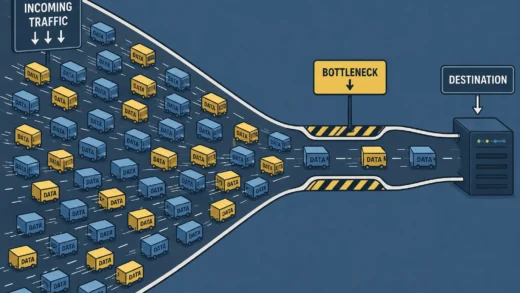
My Load Testing Origin Story
The first time I was asked to load test a website I had no idea where to start. No ChatGPT, no mentors. I Googled my way through it alone.
The site was about as simple as it gets. One page. One PDF to open or download. That’s it. And I still couldn’t pull it off.
The Gatling Disaster
I was working at a testing vendor, and a client needed their site load tested.
My first step was to find a load testing tool. I found Gatling. JMeter existed but I’d read it was hard to set up, so I got intimidated and skipped it. Gatling seemed friendlier — which in hindsight is funny because it used Scala and I only knew Java. But I could work with Scala enough to get started.
Gatling had a recorder that captured my browser flow and generated Scala code automatically. I ran it. Errors everywhere.
And here’s the thing — I had no idea what the errors meant. Was the Scala code not generating load correctly? Was the site actually buckling under pressure? Was my laptop the bottleneck? Was it my Wi-Fi? I genuinely could not tell. I had charts and data in front of me and couldn’t interpret any of it. A senior QA looked at the results and offered some insights, but I never felt confident the site had been properly tested. I never even heard whether the launch went well or not.
That was my introduction to load testing. It was a failure and I knew it.
What I Figured Out Later
After leaving for an ed-tech startup, I ran into similar errors using JMeter — error messages I initially mistook for application problems. When I finally read them carefully I realized they were JMeter’s own BindException errors. The load wasn’t even reaching the application. My system was the bottleneck, not the site.
That’s when the Gatling disaster made sense. I just didn’t know how to tell the difference between a tool problem and an application problem. Nobody had taught me that. Without knowing what to look for, all those charts and error messages were noise.
But honestly, even if I had figured that out at the time, I’m not sure it would’ve felt like real load testing. I never saw the results matter. No feedback, no launch outcome, nothing. I ran some tests, a senior QA glanced at them, and that was it. It didn’t feel like I’d actually done anything.
The Launch That Actually Worked
At the ed-tech company we were preparing for a major course platform launch. A university was opening enrollment and potentially thousands of students would hit the site within minutes to purchase courses and enroll. My job was to load test the checkout and enrollment flow.
This time I had a team. Three of us figured it out together — which made all the difference.
We discovered BlazeMeter’s recorder, which captured the API calls during the checkout flow cleanly and accurately. We realized that what we’re really load testing is backend service performance. Not whether the page looks right. Not whether the button works. Whether the servers can handle the volume of requests hitting them all at once.
We ran tests. Got real results. The data pointed to specific endpoints that were slow under load, the dev team optimized them, and when the launch happened the site held up. Thousands of users, enrollment open, no meltdown.
It wasn’t magic. It was a process we built together through trial and error — and it actually worked.
Load testing took me years and multiple real projects to feel comfortable with. There was no single tutorial that walked me through it the way I needed.
If you want to skip some of that pain, I wrote the tutorial I wish had existed when I was staring at Gatling errors alone: How to Load Test Your Backend with JMeter and BlazeMeter.