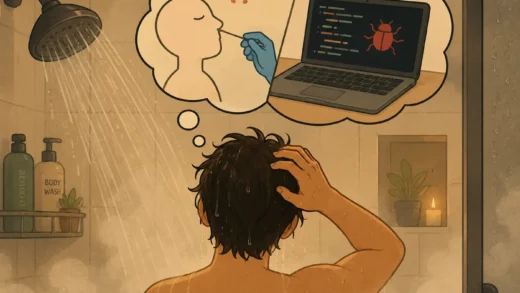
QA’s Unique Skill Isn’t Finding Bugs

Every discipline has a core skill. The thing that looks simple from the outside but takes years to actually develop. Developers have the ability to build systems — translating logic into working software. Product managers translate messy human needs into structured requirements. Designers make complex things feel intuitive.
I’ve been thinking about what QA’s equivalent is. And I don’t think the industry has named it clearly enough.
It’s not finding bugs. It’s not exploratory testing. It’s not writing test cases.
It’s producing knowledge about system risk — what’s working, what isn’t, and what nobody has checked yet. And that knowledge has a very tangible output the business actually feels: the confidence to ship.
What I Mean by Knowledge Production
I’ve written before about how software testing is really just collecting information about system behavior. And how QA is the practice of surfacing software quality risks, independently, throughout the software development lifecycle. Those two ideas connect here.
Collecting information is the activity. Making risk visible is the purpose. Knowledge production is what happens in between — taking what you observed through testing and synthesizing it into a structured, communicable picture of what works, what doesn’t, and what hasn’t been validated yet.
In my risk is visibility post I wrote that QA’s job is to give stakeholders the information they need to avoid bad outcomes — not to make the ship/no-ship decision, but to equip the people who do. That’s exactly what knowledge production is. And what well-produced knowledge generates, more than anything else, is confidence.
Not blind confidence. Not the feeling that nothing could possibly go wrong. But informed confidence — the kind that comes from knowing what was tested, what wasn’t, and what the organization is knowingly accepting as risk. That’s a different and far more valuable thing than a long list of bugs.
I’ve seen the alternative. Early in my career at a testing vendor, a team of thirty testers filed nearly a hundred bugs in a single weekend cycle. The client probably felt like they were getting value. But nobody had a picture of what hadn’t been tested. Nobody knew which areas hadn’t been touched. The bug list was long but the knowledge was thin, and the client still hit problems that delayed their release. A hundred bugs doesn’t produce confidence. A clear risk picture does.
The Difference Between Vibes and Evidence
I have a colleague who has been in QA for decades. Sharp instincts. Catches things others miss. When she says she doesn’t feel confident about a release, she’s usually right.
But nothing is ever documented. The risk picture lives entirely in her head.
So when she says “I don’t feel confident about this” — what does the team actually have? A feeling. A well-informed feeling from someone with years of experience, sure. But without documentation behind it, nobody knows:
- What she tested that’s making her feel that way
- What she didn’t test that’s contributing to the uncertainty
- Which specific areas are concerning versus which are solid
- Whether her confidence level is based on coverage or instinct
Leadership is left making a ship/no-ship decision based on a mood rather than a risk picture. That’s not QA producing confidence, but anxiety — which is the opposite of the job.
A junior QA who clicks around and finds nothing has the same problem in a different form. They think the app is fine because nothing broke while they were looking. But they can’t tell you what they covered, what they didn’t, or what confidence the organization should actually have. Their output is “I looked and didn’t see anything bad.”
I wouldn’t call that knowledge. That’s more of a feeling with fewer years behind it.
The documentation isn’t bureaucracy either. It’s the mechanism that turns testing activity into information, and information into knowledge the organization can act on and ship from.
When Knowledge Becomes a Single Point of Failure
My colleague doesn’t just keep the knowledge undocumented. She actively resists processes that would share it. She’ll suggest that the most experienced QA handle the hardest tickets — which sounds reasonable until you realize it means the knowledge never transfers. New team members can’t onboard to complex areas. Coverage can’t expand beyond what one person can hold in their head. The team can’t grow because the practice can’t scale.
Meanwhile, if that knowledge lived in documented test cases in a test management tool, anyone on the team could execute them. New people could ramp up faster. Coverage could compound over time. Someone picking up an unfamiliar feature wouldn’t be starting from zero — they’d be building on a foundation. And critically, the organization’s confidence in the product wouldn’t depend on one person being available.
Instead, the knowledge retires when she does. And so does the confidence.
That’s the real cost of treating knowledge production as a personal asset rather than a team output. The organization flies blind when she’s unavailable. Worse than that, the QA practice never grows beyond one person’s individual capacity. The team is permanently limited by a ceiling that documentation would remove.
I don’t think she’s doing this maliciously. I think she’s never been asked to redefine her job as knowledge production rather than bug finding. Bug finding rewards individual instinct. Knowledge production rewards systems that outlast individuals. Those are different orientations toward the same work, and nobody switches without being given a reason to.
Why This Is Uniquely QA’s Skill
Developers produce knowledge about their own code — whether it behaves as they intended. That’s valuable but narrow, and it’s compromised by the fact that they built it. They test what they think they built, not what’s actually there. The curse of knowledge — once you know what something is supposed to do, it’s nearly impossible to approach it as if you don’t — limits what developers can see in their own work.
Product managers produce knowledge about requirements — what a feature is supposed to do and why. Also valuable. But they’re thinking about intended behavior, not actual behavior, edge cases, or what happens when users do something unexpected.
QA produces knowledge that sits in a different and irreplaceable place: what the product actually does, across the whole system, approached without the bias of having built or designed it.
Three things have to be true simultaneously for that knowledge to be genuinely useful:
Independence — not shaped by having built the thing. This is why developers testing their own work, however skilled, are structurally limited. The knowledge is compromised before they start.
Structure — documented, communicable, with gaps explicitly named. This is where experienced, but documentation-adverse QA practitioners fall short. The knowledge exists but it isn’t transferable. It doesn’t outlast the person holding it. And it can’t produce durable confidence — only momentary reassurance.
System-wide scope — covering the whole product, not just one feature. This accumulates over time through consistently being the person who looks at everything rather than one piece. It’s why QA develops a view that no individual developer on a feature team can replicate. Because QA’s job is always to think about the whole.
Remove any one of those three and you have information collection. All three together is knowledge production. And no other role in the organization is structured to maintain all three simultaneously.
What QA Actually Produces
I’ve heard QA described as overhead. As something developers could absorb. As a function that just clicks buttons and files tickets.
That description fits a version of QA that exists. It’s the version that equates the job with finding bugs, measures success by defect count, and treats testing as something one skilled person does in their head. That version of QA is easy to dismiss because it isn’t producing anything the organization can see, build on, or scale. And honestly it isn’t producing confidence either — just feelings.
But the version that produces structured, independent, system-wide knowledge about risk? That’s not overhead. That’s the thing that lets teams ship without fear. The thing that turns “I hope this is ready” into “here’s what we know, here’s what we don’t, and here’s what we’re accepting.” The thing that makes Friday deployments feel survivable.
Developers produce code. Product managers produce requirements. QA produces knowledge that gives the team the confidence to ship.
Not vibes. Not bug lists. Structured knowledge about what’s working, what isn’t, and what nobody has checked yet — knowledge that outlasts any one person, compounds over time, and gives the whole organization something it couldn’t have without us.
That’s the skill worth naming. Because it’s the one that makes QA irreplaceable rather than optional.